What we do
Connectivity Studies
We utilise the latest methologies to assess habitat connectivity from small-to-large scales
Connectivity Studies

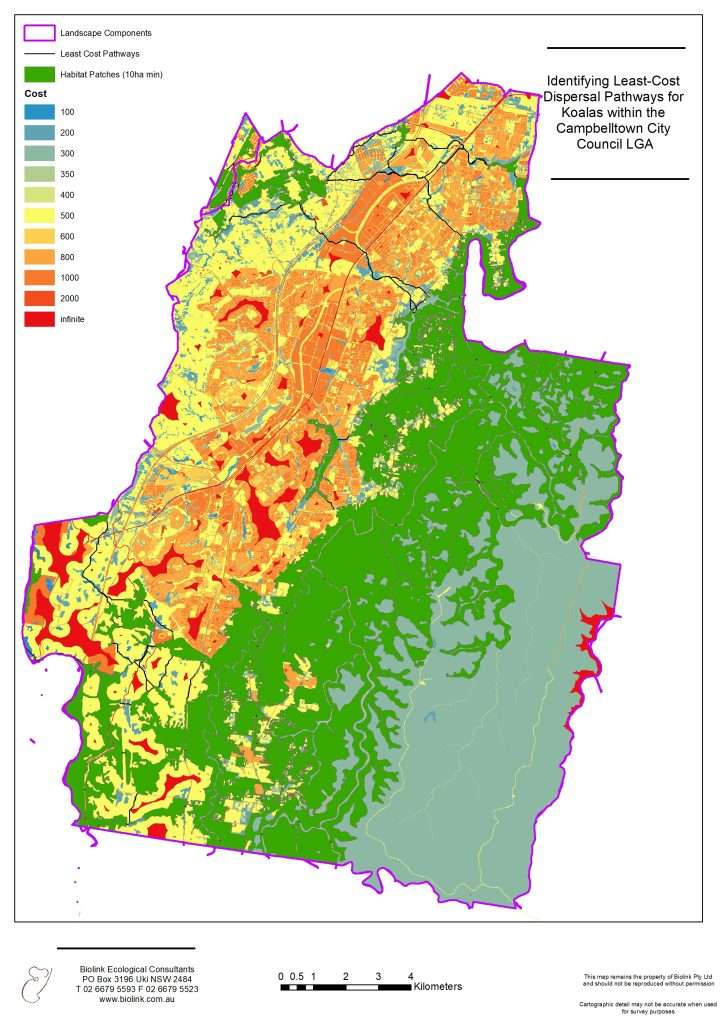
Habitat fragmentation is recognised as a key consideration for many threatened species. Accordingly, the identification and management of linkages connecting these habitat fragments is vital to the long-term sustainability of wild populations. At Biolink we run both broad and fine-scale connectivity analyses covering areas from 10 ha to more than 100,000 ha enabling stakeholders to identify and prioritise areas for protection and restoration in order to maximise conservation outcomes, as well as modelling the outcomes of differing development scenarios. We do this using the Generalised Approach to planning Connectivity at Local and Regional Scales (GAPCLoSR) framework, in concert with Graphab software. Amongst other things, GAPCLoSR considers the ecological needs and movement characteristics of a given target species and the extent to which the landscape functions to impede and / or facilitate movement. Other modelling approaches can be used, at Clients request.